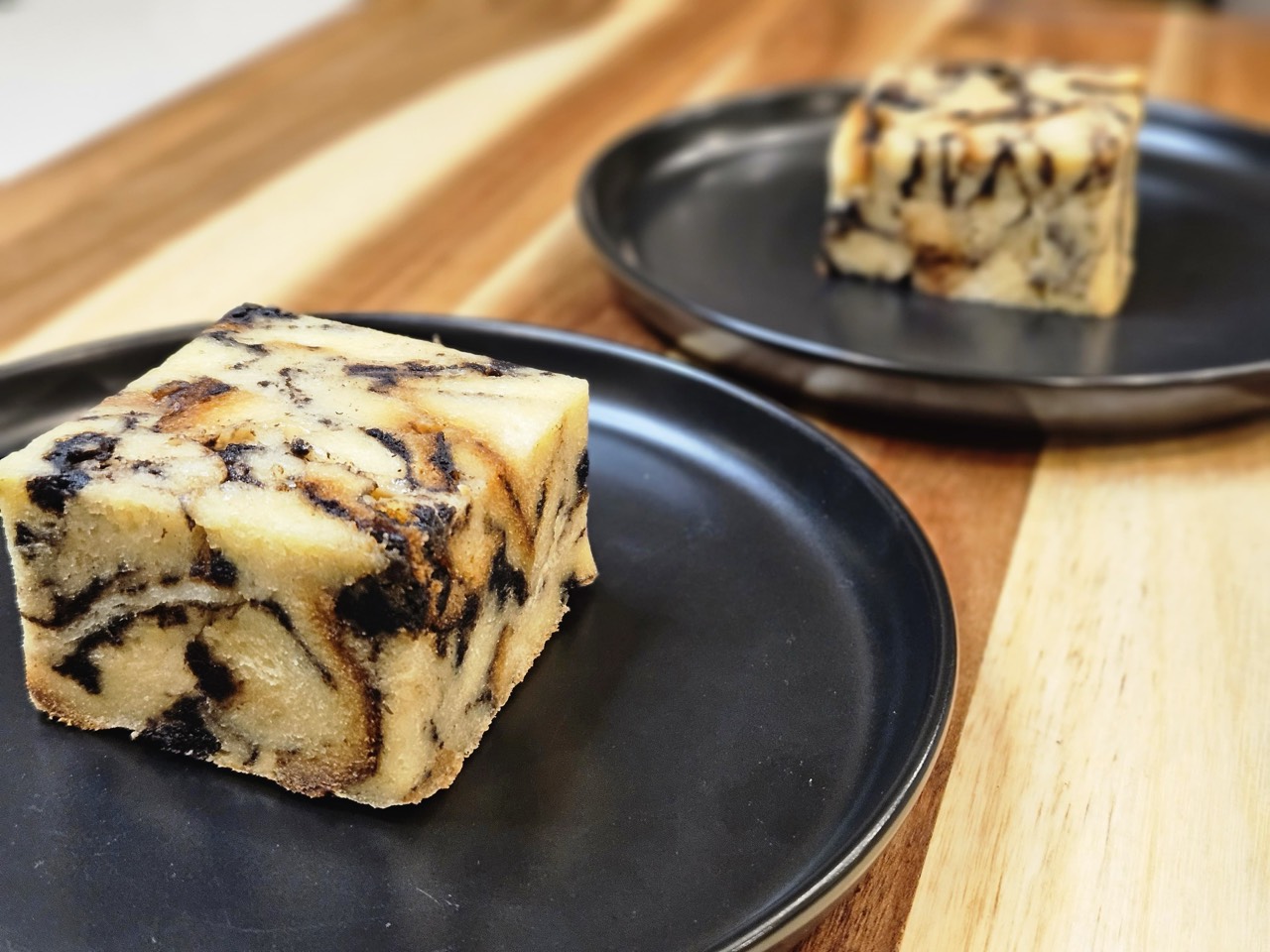
A classic, custardy bread pudding baked into a uniform loaf shape for clean, sliceable portions, then finished with silky crème anglaise.
This traditional bread pudding bakes into a neat, sliceable loaf so you get uniform custardy pieces instead of a loose casserole. It’s made with soaked bread and eggs for a tender, creamy center, then served with silky crème anglaise for a classic French-style finish. Make it when you have leftover bread and want a make-ahead dessert that reheats cleanly for serving.
10 g unsweetened cocoa powder (optional), for subtle “traditional” depth
For the Crème Anglaise
500 ml whole milk
120 ml heavy cream
6 large egg yolks
100 g granulated sugar
15 ml vanilla extract
1 pinch fine salt
Instructions
Tear the bread into 2–3 cm pieces and set aside.
In a large bowl, whisk together the eggs, sugar, vanilla, cinnamon, salt, melted butter, and cocoa powder (if using) until smooth.
Warm the milk and cream together in a saucepan over medium heat until steaming (do not boil).
Slowly pour the hot milk mixture into the egg mixture while whisking constantly to temper.
Stir in the bread pieces and raisins (if using). Press down gently but firmly once so the bread is fully submerged and there are no dry pockets, then let stand 10 minutes.
Preheat the oven to 325°F (165°C). Lightly butter a 1.5 lb bread tin (shokupan tin).
Pour the bread mixture into the tin and bake until the center is just set and a knife inserted near the middle comes out mostly clean, 45–55 minutes.
Remove from the oven and let stand 5 minutes, then compress for 30 minutes: keep the pudding in the tin and press it with a flat weight (wrapped in parchment or plastic wrap so it doesn’t stick) to gently flatten and knit the custard-bread matrix.
After compression, cool completely, then chill until firm (at least 4 hours, or overnight).
While the pudding bakes, make the crème anglaise: warm the milk and cream in a saucepan over medium heat until steaming.
Whisk egg yolks, sugar, vanilla, and salt in a bowl until smooth.
Slowly whisk the hot milk mixture into the yolk mixture, then pour everything back into the saucepan.
Cook over low heat, stirring constantly with a heatproof spatula, until thick enough to coat the back of the spoon (about 170–175°F / 77–80°C), 6–10 minutes. Do not boil.
Strain the crème anglaise through a fine-mesh sieve into a bowl, then keep warm (or cool and rewarm gently).
Unmold the chilled pudding, slice into even portions, and rewarm slices in a 325°F (165°C) oven until warmed through (about 10–15 minutes).
DessertBreakfastBaking
Chef's Notes
- For a uniform, homogeneous slice, press firmly once during the 10-minute soak so the bread is fully saturated before baking.
- Compress only after the pudding is baked and just set (and after a short 5-minute rest), then chill fully for clean slicing.
Plating & Presentation
Slice the pudding into neat, even portions and fan or stack slightly on warm plates. Spoon crème anglaise generously around and over each slice; finish with a light dusting of cinnamon or cocoa if desired.
Frequently asked questions
Can I use different bread (stale vs fresh, brioche vs sandwich bread)?
Use day-old bread for best absorption—stale bread soaks the custard without turning gummy. Brioche makes it richer, while very soft sandwich bread may need a slightly longer rest to fully hydrate; press once and check for no dry pockets before baking.
Why temper the eggs with hot milk/cream, and what happens if I skip it?
Tempering prevents scrambled eggs by gradually raising the egg mixture’s temperature. If you pour hot dairy in too fast, the custard can curdle and the pudding won’t set smoothly.
How do I know the bread pudding is done at 45–55 minutes?
It’s ready when the center is just set and a knife inserted near the middle comes out mostly clean (some custard clinging is fine). If it looks wet and sloshy, bake 5-minute increments; if it’s firm all the way through, it may bake past the custardy texture.
What does the “compression” step do, and can I skip it?
Compression helps knit the bread-custard matrix for a uniform, sliceable loaf with cleaner edges. You can skip it, but slices may be softer and less uniform; if you do compress, keep it in the tin and use a wrapped weight so it doesn’t stick.
How should I store and rewarm both the pudding and crème anglaise?
Chill the baked pudding (still in the tin or wrapped) at least 4 hours, then slice and rewarm slices at 325°F/165°C for 10–15 minutes. Store crème anglaise covered in the fridge; rewarm gently over low heat or in short microwave bursts, stirring often—don’t boil or it can split.
 Compagnon
Get the app
Compagnon
Get the app




No reviews yet — be the first.