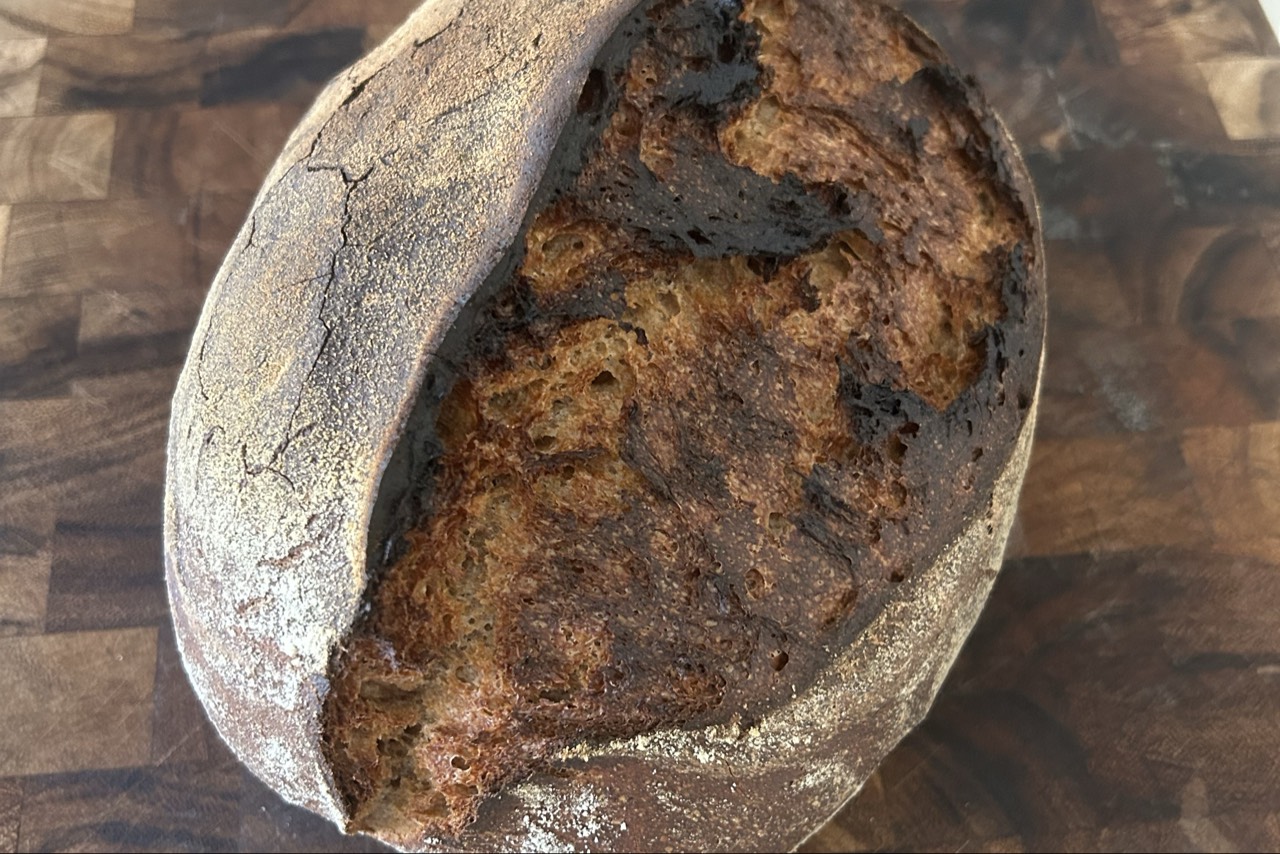
A hearty, tangy batard with a tender whole-wheat crumb and a clean, classic sourdough flavor. Built with a small levain for reliable fermentation and a smooth, shape-friendly dough.
Whole Wheat & Rye Sourdough Batard is a hearty, tangy loaf with a dense-but-open crumb from whole wheat and a deeper, slightly earthy flavor from rye. It’s ideal when you want strong sourdough flavor without a fussy process—this version uses simple bulk “stop” cues so you can ferment, shape, and bake with consistent results.
Mix the ripe starter, water, and whole wheat flour for the levain until smooth with no dry flour. Cover and ferment until at peak activity (domed, bubbly, noticeably risen).
Dice the dough’s “mark test” setup: place a strip of tape or make a marker line on the outside of your bowl at the dough’s starting height (this is for bulk timing).
In a large bowl, combine the whole wheat flour, bread flour, and water. Mix until no dry flour remains (shaggy is fine). Cover and rest 30–60 minutes (warm kitchen: 30 min; cool kitchen: 45–60 min).
Add all the ripe levain and the salt. Mix thoroughly until fully incorporated and the dough looks more cohesive.
Rest 10 minutes (optional).
Do 4 sets of stretch-and-folds: stretch one side up and fold over, rotate the bowl and repeat until one set is complete, then rest 30 minutes between sets.
Bulk ferment at room temperature until the dough reaches the target zone using cues (aim for 50–75% rise, not “until it looks bubbly”): - **Best method (mark test):** after mixing (right before bulk starts), note the starting height; stop when the dough reaches about **1.5× height (~50%)** or **1.75× height (~75%)**. - **If you didn’t mark:** stop when the dough is **aerated and slightly domed but still structured**, with bubbles at the sides/top, and when a floured finger poke leaves a dent that **fills slowly** (not instantly) and the dough still holds a rounded shape when you gently turn it out. - **Over-bulk warning:** if it becomes very **jiggly/loose**, spreads when turned out, feels **slack/gluey**, or the dent barely holds, stop earlier next time.
Turn out gently onto a lightly floured surface. Pre-shape into a loose batard, rest 10–15 minutes, then shape tightly into a batard. Place seam-side up in a floured proofing basket or towel-lined bowl.
Proof until puffy and springs back slowly when gently pressed. If scheduling is tight, refrigerate 8–16 hours; otherwise proof at room temp (often 45–90 minutes).
Preheat the oven to 475°F / 245°C with stone/steel and a covered baking vessel (Dutch oven/cloche) if using, and preheat fully (about 30 minutes). Score the dough, bake covered 20 minutes, then uncover and reduce to 425°F / 220°C. Bake until deeply browned and internal temp is about 205°F / 96°C (often another 20–35 minutes). Cool completely.
Cool on a rack at least 1–2 hours before slicing.
BreadVegetarianBreakfast
Chef's Notes
- Use the **mark test or finger-poke cue** to stop bulk at the right moment—over-bulk is what makes whole-grain doughs feel slack and sticky during shaping.
- Bake until the loaf hits **~205°F / 96°C** and cool fully; slicing too early can make the crumb seem gummy.
Plating & Presentation
Slice the batard with a sharp serrated knife and serve on a wooden board. Arrange slices slightly overlapping; optionally add a small dish of butter or olive oil for dipping.
Frequently asked questions
Can I use a different hydration or flour blend for this batard?
This dough is built around ~325 g water for the listed flours, so swapping flour types will change hydration and fermentation speed. If you substitute (e.g., more bread flour or less rye), keep the dough slightly firm and adjust bulk timing using the 50–75% rise/slow-filling dent cues rather than the clock.
How do I know my bulk fermentation is done if my dough feels different than the description?
Use the mark test if possible: stop at ~1.5× height (50%) for a tighter crumb or ~1.75× (75%) for more lift. If you didn’t mark, stop when the dough is aerated and domed but still structured, and a poke dent fills slowly (not instantly) while the dough holds a rounded shape.
What happens if I over-bulk this whole wheat/rye dough?
Over-bulked dough often turns jiggly/loose, spreads when turned out, and feels slack or gluey; the poke dent won’t hold its shape. If you see those signs, bake it sooner next time and aim for the lower end of the target rise (closer to 50–65%).
Can I refrigerate the shaped batard, and how long is safe?
Yes—refrigerate seam-side up in the basket/towel for 8–16 hours. If your kitchen is warm or your starter is very active, lean toward 8–12 hours to avoid over-proofing and loss of oven spring.
What’s the best way to check doneness for this loaf?
For this batard, bake until the crust is deeply browned and the internal temperature hits about 205°F / 96°C. If you don’t have a thermometer, wait for a hollow-ish sound and let it cool fully before slicing to prevent gummy rye/whole-wheat crumb.
Version history
17 versions›
Renamed to "Whole Wheat & White Sourdough Batard", Added Levain (all of the levain above)
 Compagnon
Get the app
Compagnon
Get the app



No reviews yet — be the first.